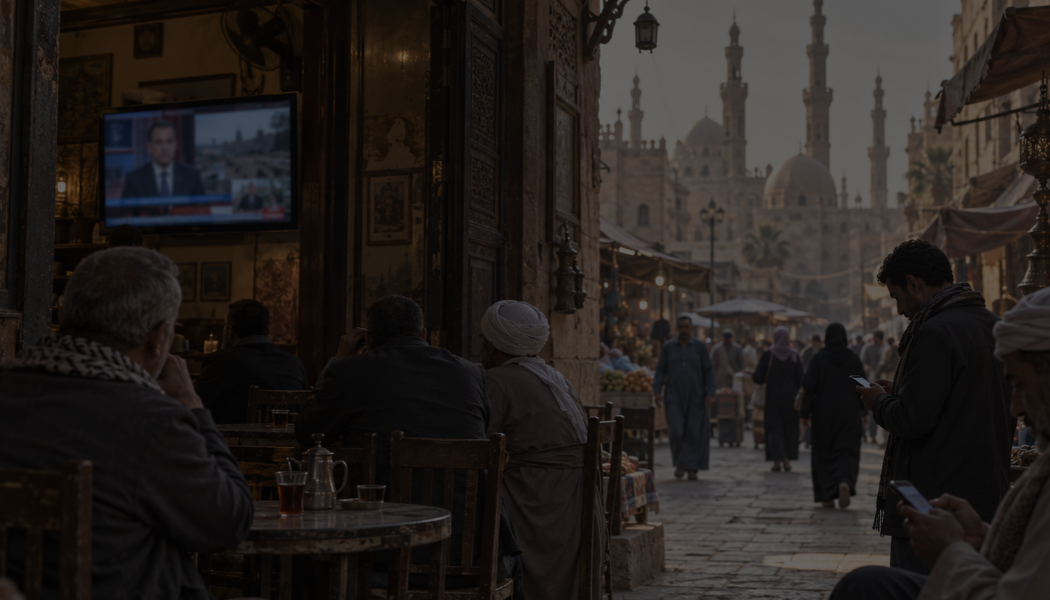
“The accused, acting on the instructions of a foreign emissary of an international terrorist organisation based in Poland, were spreading terrorist ideology among local Muslims and migrant workers,” reads the official statement of the Russian Federal Security Service (FSB). In another part of the statement, the FSB refers to “a covert cell of an international terrorist organisation which was planning a violent takeover of power and the establishment of a so-called global caliphate.”

At first glance, this may appear to be a report of a genuine threat to the security of the Russian Federation. In reality, however, it is yet another episode in the long-running series of Russian propaganda, in which Poland—alongside NATO and the European Union—plays the role of the principal villain.

We asked experts from the INFO OPS laboratory to analyse the footage prepared by the FSB. Thanks to a frame-by-frame examination, we obtained evidence indicating that this is a crude provocation. The video appears to be a staged media operation—and this for several reasons.

Signs of a Provocation – Elements of Staging

Lack of Operational Dynamics:

In many shots, the officers are seen standing in loose groups, moving slowly and without any evident time pressure. In genuine counterterrorism operations, swift, coordinated action dominates, with immediate securing of the area and neutralisation of threats. The footage is recorded from multiple convenient angles—both close-up and wide—as if the purpose were to produce visually appealing scenes for propaganda purposes. One of the officers deliberately turns to face the camera, allowing his face to be recorded—an act that contradicts the protocols of intelligence services, which require the protection of personnel identities.

Absence of Basic Security Measures:

The video does not show any buffer zone or perimeter patrols securing the location of the operation. Under standard conditions, such an area would be cordoned off with tape, vehicles, or physical barriers. Officers are seen moving with their weapons lowered, with fingers resting on the triggers rather than indexed along the frame—an elementary firearms safety breach. One purported FSB member is shown standing with his back to a potential threat, engaging in casual conversation with another officer instead of monitoring his assigned sector. There is no visible division into operational roles such as assault, perimeter security, or communication, which suggests a lack of genuine tactical preparation.

Deviations from Operational Doctrine:

At no point is a commanding officer visible overseeing the operation. In professional settings, the commander—or at least a designated radio operator—is responsible for controlling the tempo, coordinating communication, and managing the distinct phases of the arrest. After the alleged suspects are detained, no standard procedure is followed to check for explosives, concealed weapons, or potential links to a broader network. Officers stand near the suspects in an unstructured formation, with no designated observation sectors and without the use of specialist reconnaissance or security equipment.

Absence of Psychophysical Features Typical of Real Operations

Lack of Adrenaline Response:
In genuine counterterrorism operations, one typically observes tense muscles, rapid movements, and short, urgent verbal commands. In the footage under analysis, the movements of the officers are slow, no audible commands are issued, and conversations take place in a calm, unhurried tone.

No Signs of Situational Stress Among the Detainees:

The individuals being detained show no typical signs of arrest-related stress. They do not resist, panic, attempt to flee, or make any sudden movements. They remain seated calmly, which clearly indicates that this is a staged scenario.

The video, which was intended to convey the effectiveness of the FSB and the menace of alleged “Polish terrorism,” reveals itself as a poorly staged performance. The slow pace, lack of professionalism, and deliberately aestheticised shots suggest a piece of propaganda rather than documentation of an actual operation.

This is yet another example of how the Kremlin utilises audiovisual media to construct a narrative of a “besieged fortress” while demonising the West—this time with Poland cast as the principal antagonist.

The Kremlin’s Script: Poland as an Instigator of Chaos

The accusation that Warsaw is inspiring terrorism in Russia is no coincidence. It constitutes yet another step in the broader framework of the Kremlin’s information strategy, which for months has been intensifying narratives that portray Poland as a “provocateur”, a “puppet of Washington”, and a “source of regional destabilisation.” This narrative has now been reinforced with the addition of a terrorism motif—a key term in the Russian propaganda lexicon that immediately triggers fear and a sense of threat within society.

It is no accident that this message is being repeated across Russian social media and news platforms, including the Arabic-language version of Sputnik:

“The discovery of a Central Asian extremist cell in the Nizhny Novgorod region promoting terrorist ideology on the orders of Poland.”

Such a sentence is a textbook example of disinformation: it is simple, emotionally charged, and easy to disseminate further across the media space, including beyond Russia’s borders. The amplification of this narrative by Sputnik Arabic indicates an effort to reach audiences in the Middle East and Asia, where accusations against the West of fomenting chaos may find a receptive audience.

A Psychological Operation Targeting the Domestic Audience

Why has the Kremlin chosen to take this step now? It is worth viewing this decision within a broader context. Russia is currently grappling with the escalating costs of the war in Ukraine, severe economic sanctions, and mounting social tensions. In such conditions, a classic mechanism for managing public sentiment is the diversion of attention by designating an “external enemy”.

In its official statement, the Federal Security Service not only lays the blame on Poland but also highlights the effectiveness of its own actions:

“The FSB in the Nizhny Novgorod region has thwarted the activities of a covert cell of an international terrorist organisation banned in Russia, consisting of seven citizens from a Central Asian country.”

The message is unequivocal: had it not been for the vigilance of the security services, Russian citizens would have fallen victim to a foreign plot. This type of communication serves not only to reinforce trust in the state security apparatus but also to justify the further restriction of civil liberties.

The International Dimension: Demonising Poland and NATO

The inclusion of Poland in the narrative surrounding terrorism is, at the same time, an attempt to weaken its standing as a key regional actor and a committed ally of Ukraine. Russian media regularly feature themes portraying Poland as an “aggressor preparing provocations” or as a “state executing NATO’s anti-Russian directives.” Now, a new label has been added to this list: that of a “sponsor of terrorism.”

The demonisation of Poland also serves as a signalling tool aimed at third countries. The Kremlin has been systematically constructing a narrative in which the West—with Poland as one of its principal agents—is responsible for global destabilisation. This messaging line is specifically designed to resonate in countries of the Global South, where anti-Western sentiments are often strong and susceptible to such interpretations.

Propaganda Techniques in Action

An analysis of the FSB’s messaging and Russian media coverage reveals a full spectrum of propaganda techniques. These include:

  • Personalisation of the threat: Identifying a “foreign emissary from Poland” lends the narrative a sense of specificity and immediacy.
  • Demonisation of the adversary: Poland is cast as a symbol of Western aggression.
  • Amplification of the message: The claim is repeated across multiple Russian information channels, including Sputnik Arabic.
  • Cultivation of fear: Phrases such as “global caliphate” and “violent seizure of power” serve to intensify emotional reactions.

This messaging operates on multiple levels. First, it stokes fear of an “external enemy” who could be anywhere—among migrants, in mosques, on the street. Second, it consolidates the population around the Kremlin as the sole guarantor of security. Third, it lays the psychological groundwork for possible retaliatory measures against Poland, whether in the information space or potentially even in the military domain.

Although at first glance it may sound like the plot of a B-grade film, Russian media present the story in earnest: Poland is alleged to have orchestrated the activities of an extremist cell in the Nizhny Novgorod region. Accusing another state of inspiring terrorism is among the gravest charges that can be levelled in international discourse. Yet it is worth asking whether this is truly about facts—or rather about a meticulously crafted propaganda message.

Absurd That Makes Sense in the Kremlin’s Logic

In the West, such accusations would likely elicit little more than a condescending smirk. Yet within the logic of the Kremlin, this absurdity fits seamlessly into a narrative that has been carefully and consistently constructed over the years. The portrayal of “Poland as an aggressor” is far from new: Poland has previously been depicted as a “hysterical Russophobe,” a “NATO pawn,” or a “provocateur of war on the eastern flank.” Now, another role has been added to the repertoire—that of a “sponsor of international terrorism.”

Propaganda as a Weapon

Russian propaganda has long functioned as a well-oiled machine. In its messaging, no words are accidental. Phrases like “global caliphate,” “violent seizure of power,” and “foreign emissary from Poland” are carefully chosen to provoke specific emotional responses: fear, anger, and mistrust. The purpose is not to inform, but to mobilise—to shape a narrative mirror in which the Kremlin appears as the sole force capable of averting chaos.

Moreover, the reinforcement of this message through Sputnik’s Arabic-language channels is further evidence that the Kremlin’s target audience extends beyond its domestic population. It is aimed also at countries of the Global South, where narratives about the “malevolent West destabilising the world” often find fertile ground.

Why the West Should Remain Vigilant

The accusation that Poland is supporting terrorism is not merely a case of routine propaganda—it also serves as a warning to democratic societies: the Russian disinformation apparatus recognises no taboos. It is prepared to exploit any narrative, no matter how toxic, including one as incendiary as terrorism sponsorship, to achieve its strategic objectives.

For Poland, this is nothing new. For months, Russian media have accused Warsaw of “provoking conflict in Ukraine,” “expanding hostile NATO infrastructure,” or “preparing an invasion of Belarus.” This time, however, the Kremlin has raised the stakes. In Russian political discourse, terrorism represents one of the gravest possible accusations—previously levelled primarily at the United States or the United Kingdom.

That Poland has now “graduated” into this “elite” group of designated enemies should come as no surprise. As an active NATO and EU member, a key hub for support to Ukraine, and a vocal advocate for strengthening the Alliance’s eastern flank, Warsaw is a natural target for Kremlin-directed information operations.

It is important to recognise that this is not only a strategic game directed at the West. It is also a domestic instrument of social control within Russia. The average Russian citizen, upon hearing of a “Polish sponsor of terrorists,” is reinforced in the belief that their country is surrounded by threats. Migrants from Central Asia are recast in this narrative as potential Western agents—providing the Kremlin with a rationale for heightened surveillance, arrests, and the continued erosion of civil liberties.

Conclusion: A Dangerous and Predictable Narrative

Although the accusation against Poland may seem grotesque, it should not be dismissed lightly. It is not a random outburst but part of the Kremlin’s long-term strategy—one that increasingly employs disinformation as a weapon: ruthless, boundless, and unrestrained in its choice of means.

For Poland and its NATO allies, this is a warning signal. We must assume that similar accusations will recur—perhaps in even more aggressive forms. And we must be prepared to counter them, not only through firm rebuttals but also by actively strengthening our societies’ informational resilience.

———–

A public task financed by the Ministry of Foreign Affairs of the Republic of Poland within the frame of “Public Diplomacy 2024-2025: The European Dimension and Countering Disinformation” contest

The publication expresses only the views of the author and cannot be identified with the official position of the Ministry of Foreign Affairs of the Republic of Poland.


Russian disinformation on the situation in Syria – an attempt to link jihadists to UkraineCultureEducationPoliticsSecurityTechnology

Russian disinformation on the situation in Syria – an attempt to link jihadists to Ukraine

ShaffafiyaShaffafiya2025-12-15
From Airstrikes to Manipulation. Sudanese Gold in Russian and Ethiopian Information Narratives
From Airstrikes to Manipulation. Sudanese Gold in Russian and Ethiopian Information NarrativesEgyptNewsPoliticsSecurity

From Airstrikes to Manipulation. Sudanese Gold in Russian and Ethiopian Information Narratives

ShaffafiyaShaffafiya2026-10-16
**Kyiv Blocks Peace, Putin Stabilizes the World: Russian Narratives in Arab Information Ecosystems** The Donald Trump administration’s decision to permit trade in Russian diesel provided the Kremlin with an argument whose credibility stemmed from the actions of Washington itself. Russian media leveraged it to present Moscow as an indispensable partner to the United States, while simultaneously disseminating accusations against Ukraine of blocking peace negotiations. Media monitoring of Arab outlets from October 8–10, 2026, illustrates how messaging from RT Arabic and TASS reached regional news services, where the Russian stance on the war appeared alongside reports of economic cooperation with the U.S. and diplomatic proposals regarding Iran. This juxtaposition enables Moscow to exploit genuine international developments to bolster the credibility of its own framing of the war against Ukraine. On October 9, 2026, Donald Trump announced an agreement with Vladimir Putin regarding supplies of Russian diesel fuel to the American and global markets. On the same day, the U.S. Department of the Treasury authorized specific transactions involving Russian diesel, temporarily easing a portion of the sanctions tied to the war against Ukraine. The decision came during a fuel crisis triggered, in part, by the conflict between the United States and Iran. Concurrently, Russian sources began circulating statements from Kremlin officials regarding peace negotiations. According to Putin’s advisor, Yuri Ushakov, it was Ukraine’s actions during the September Russian Duma elections that made an immediate resumption of talks impossible. This message was published by RT Arabic and subsequently appeared in Arab news services outside Russia. In parallel, Persian Gulf media outlets carried reports detailing Russian diplomatic proposals concerning Iran. ### From Kremlin Announcements to Arab News Outlets The dissemination process of Yuri Ushakov’s statements following the Putin-Trump call can be traced through consecutive publications. On October 9 at 23:17 GMT, RT Arabic published a piece titled *"Putin to Trump: Kyiv's Attempts to Disrupt the Duma Elections Prevented the Immediate Resumption of Negotiations."* The publication outlined the position of the Russian authorities, claiming that Ukrainian drone attacks during the September vote had eliminated the possibility of rapidly resuming trilateral talks involving Russia, Ukraine, and the United States. Ushakov employed the term "Kyiv regime" and framed Ukrainian actions as an attempt to torpedo the political process. His account also indicated that Trump took note of Putin’s position and promised to convey the relevant information to the Ukrainian delegation present in Miami. Ushakov’s explanation shifted responsibility for the diplomatic impasse from Moscow to Kyiv. Ukrainian strikes conducted during the Duma elections were presented as the obstacle to resuming negotiations. This allowed the Kremlin to justify the lack of progress in talks while maintaining declarations of its readiness for a peaceful resolution to the conflict. On October 10, an article with an identical title appeared in the Egyptian daily *Al-Dostor*. A comparison of the two pieces demonstrates near-verbatim alignment, including the order of statements, structural composition, and specific phrasing. However, *Al-Dostor* did not cite RT Arabic as its source. It remains unclear whether the text was acquired directly from the Russian service or through an intermediary distribution channel. Simultaneously, the Lebanese outlet *Beirut Time* published the text, explicitly citing RT Arabic as its source. In this instance, the origin of the message is transparent. The site functions as an aggregator and, in other publications, notes that it automatically ingests content from external websites, including Russian media outlets. This documented case illustrates the mechanics of a retransmission channel, though it does not conclusively demonstrate deliberate engagement by the Lebanese editorial team in promoting Russian narratives. Materials attributed to Russia Today were also published by the Yemeni daily *Al-Ayyam*, based in Aden. On September 7, 2026, it carried statements by Dmitry Peskov regarding the possibility of resuming peace negotiations with Ukraine. Later, on September 12, it ran a piece on allegations that Ukrainian military instructors were supporting armed groups in Mali and Sudan. In both instances, Russia Today was cited as the source. These publications document an established presence of Russian messages in the Yemeni press, though they do not clarify whether the articles were ingested automatically. A simple reprint on a local website does not in itself prove significant reach or influence over target audiences. It merely confirms that content from Russian state media was made available beyond its proprietary channels. The publication by the Emirati daily *Al Khaleej* on October 10 presents a different picture. Its report on the 90-minute phone call between Trump and Putin utilized information from the Russian news agency TASS as well as Kremlin statements. Right from the headline, both presidents were depicted as statesmen seeking solutions to global conflicts amid cascading crises. The body of the article included Russian assertions blaming Kyiv for the failure to resume peace talks, alongside characterizations of Ukrainian military operations as "terrorist attacks." While the article attributed these statements to Russian officials, its overall structure highlighted Moscow’s diplomatic engagement and Putin’s readiness for dialogue. *Al Khaleej* juxtaposed Russian allegations against Kyiv with details on Putin’s proposals regarding the Iranian nuclear program. Readers were thus presented with a narrative in which the Kremlin attributes the peace impasse to Ukraine while simultaneously offering its own solutions to the crisis in the Middle East. Such framing reinforces Moscow's diplomatic profile, even if it does not prove that the Emirati editorial board intentionally intended to advance Russian positions. ### The Energy Crisis Opened New Communication Space for Russia On October 9, the U.S. Office of Foreign Assets Control (OFAC) issued General License No. 135, authorizing transactions related to the sale, delivery, discharge, and import of Russian diesel fuel through April 7, 2027, within the scope of specified sanctions regimes. The license does not represent a complete repeal of sanctions against Russia, nor does it guarantee the actual delivery of the announced fuel volumes. It does, however, establish a legal avenue for conducting specific commercial transactions. Trump announced that Russia would deliver over 300,000 metric tons of diesel in an initial batch, followed by 500,000 metric tons in November, one million metric tons in the subsequent phase, and up to an additional three million tons depending on the capacity of Russian refineries. The announcement came against a backdrop of rising fuel prices in the United States, just weeks prior to the Congressional elections. Russian state media seized upon this event to highlight the mutual benefits of Moscow-Washington cooperation. RT Arabic featured statements from Kirill Dmitriev regarding the future of Russian-American economic relations, as well as comments from Trump thanking Putin for the fuel agreement. Russian messaging constructed an image of Moscow as a partner capable of alleviating energy supply constraints in the United States. Not all Arab media outlets adopted this interpretation. In its coverage on October 10, *Al Jazeera* detailed the economic limitations of the agreement, calling attention to the modest scale of the promised deliveries relative to global demand, as well as structural challenges within Russian refineries. It also included the perspective of Volodymyr Zelenskyy, who framed the easing of sanctions as a move that directly facilitates the continued financing of Russia’s war. Washington's decision also intersects with the broader debate on energy security across MENA states, an issue intensified by the regional escalation around Iran. Consequently, Russian media can frame engagement with Moscow as a pragmatic response to tangible economic challenges rather than a purely political overture. ### Russia’s Mediation Offer in the Iran Conflict Following the Trump-Putin call, Russian media heavily promoted Moscow's proposals regarding the Iranian nuclear program. According to reports by TASS, Putin reiterated Moscow’s willingness to take custody of Iran’s enriched uranium, presenting the offer as a potential centerpiece for a broader agreement between Washington and Tehran. Yuri Ushakov emphasized that diplomatic avenues for resolving the conflict had not been exhausted. The Russian president reportedly also conveyed Tehran’s official stance directly to Trump. These details were featured in the aforementioned *Al Khaleej* report. Within a single article, Russian accusations against Ukraine were presented alongside Moscow’s proposals to resolve the confrontation over Iran. Russia leverages its relationship with Tehran to position itself as an indispensable interlocutor for Washington on matters outside the immediate scope of the war in Ukraine. The proposal regarding Iranian uranium enables Moscow to showcase its role in Middle Eastern security discussions. Whether the Russian offer brought a deal on Iran any closer remains undetermined. Nevertheless, it gained traction in Arab coverage of the Trump-Putin exchange, appearing prominently alongside the Ukrainian situation and fuel shipments. ### Transfer of Russian Narratives and the Limits of Findings The monitored publications reveal two distinct mechanisms by which Russian messaging enters regional information flows: 1. **Direct Reprinting:** Local platforms republish content produced by RT Arabic. 2. **Local Editorial Synthesis:** Regional newsrooms author original articles incorporating Russian sources, primarily TASS. The first mechanism demonstrates the direct replication of original content; the second reflects how quotes and framing provided by Moscow officials are selected and incorporated by local editors. While these documented instances confirm the transmission of Russian messages, they do not establish the existence of a coordinated FIMI (Foreign Information Manipulation and Interference) operation. No operational links between the newsrooms were identified, nor were networks of inauthentic accounts found amplifying this specific content. Transparent reprints of RT Arabic material and reliance on TASS wires may simply reflect routine editorial practices. These conclusions apply specifically to the analyzed texts rather than the Arab media landscape as a whole. In the case of *Al-Dostor*, the article closely mirrored content published by RT Arabic but omitted any attribution to the Russian source. As a result, readers of the Egyptian outlet were not clearly informed that the piece originated from a Russian state media entity. While this does not prove deliberate intent on the part of the editors, it demonstrates how attribution to the primary source can erode as content moves through downstream distribution channels. ### Analytical Assessment The primary mechanism identified in this monitoring cycle is the strategic utilization of real-world policy decisions to reinforce Russian interpretations of international events. The Trump administration’s authorization of specific transactions involving Russian diesel validates Washington's willingness to engage in limited economic cooperation with Moscow despite the ongoing war. Russian media exploit this fact as proof of Russia’s political and economic utility. Simultaneously, they circulate Kremlin talking points attributing the deadlock in peace negotiations entirely to Ukraine. This creates an environment where the credibility of factual reports regarding U.S. actions is transferred to political claims made by Russian authorities—claims that find no actual corroboration in those policy decisions. For the Kremlin, this represents an effective communication strategy within the MENA region. The conflict surrounding Iran and regional energy security directly touch upon local political and economic interests. Reports highlighting Russian involvement in addressing these crises can capture the attention of audiences that may not follow the day-to-day progression of the war in Ukraine. Moscow thus gains the ability to project its policy through the lens of pragmatic cooperation with Washington and proactive diplomacy, relegating its aggression against Ukraine to the background. The most significant consequence of this mechanism would be the gradual decoupling of Russia’s political assessment as an aggressor from its image as a useful partner in security and economic matters. Russian communications can leverage real policy decisions by foreign governments as arguments for normalizing relations with Moscow, subsequently linking that messaging to accusations leveled at Ukraine. However, the ultimate efficacy of this tactic remains unverified. Current monitoring documents distribution channels and publication content, but it does not confirm shifts in audience attitudes or the presence of a coordinated FIMI campaign. Determining whether Russian interpretations begin to circulate independently within the commentary, political discourse, and editorial coverage of Arab outlets—without direct attribution to Russian sources—will be decisive for future assessments.
Kyiv Blocks Peace, Putin Stabilizes the World: Russian Narratives in Arab Information EcosystemsNews2RussiaSecurity

Kyiv Blocks Peace, Putin Stabilizes the World: Russian Narratives in Arab Information Ecosystems

ShaffafiyaShaffafiya2026-10-11