

Project Shafafiyat
الشفافية | شەفافیەت
Szaffaf/szaffafiat (transparency)
Help us build awerness and security in the global South.

From Airstrikes to Manipulation. Sudanese Gold in Russian and Ethiopian Information Narratives
From Airstrikes to Manipulation. Sudanese Gold in Russian and Ethiopian Information Narratives

How Law Becomes a Tool of Influence: The Case of Armenia
How Law Becomes a Tool of Influence: The Case of Armenia
![In official discourse, Russia today presents itself as a natural partner of the Global South and as a defender of a multipolar world order in opposition to what it describes as Western dominance. This narrative resonates strongly in the Arab world, as it echoes a deep political memory that goes back to the Bandung Conference of 1955, when post-colonial states, including Egypt under Gamal Abdel Nasser, sought to chart an independent path beyond the rivalry of great powers. At that time, the goal was not alignment, but precisely the opposite. As analyses published by Explaining History note, Bandung leaders declared their rejection of “colonialism in all its forms”, whether Western or Soviet. The central idea was clear: true independence meant not becoming a tool in someone else’s conflict. Today, Russia invokes the same language, but operates according to a different logic. From Partnership to Exploitation Facts on the ground reveal a different picture. In Iraq, for example, security investigations uncovered recruitment networks targeting young people. As reported by The New Arab, they were lured by offers of work or study, which later “turned into military service contracts” after arrival in Russia. The issue was not only deception, but also the structure of the process itself, where individuals were pressured to sign documents in a language they did not understand. Other sources confirm that these were not isolated cases. The National reports that young people were recruited through “seemingly legal channels such as travel agencies or employment offices”, only to find themselves bound by contracts they could not escape. The same source adds that “around 3,000 Iraqis ended up in the Russian army”. What is happening here is not cooperation between states, but the exploitation of economic and informational asymmetries. Cuba and Africa: The Same Pattern, Different Tools In Cuba, the mechanism takes a different form but follows the same logic. According to an analysis by the Friedrich Naumann Foundation, recruits were offered salaries “of up to 2,000 USD per month, compared to an average Cuban income of around 17 USD”, along with promises of property and citizenship. In such conditions, the issue is less about free choice and more about economic pressure. In Africa, the picture is more fragmented, but the underlying logic remains similar. Al Jazeera reported, citing Ukrainian sources, that “more than 1,780 African nationals are currently fighting in the Russian army”, with recruitment spanning dozens of countries. The same sources indicate that many were drawn in through “black market labor […] without proper training”, often under the pretext of civilian employment. At the individual level, the situation becomes even clearer. A Reuters report states that some recruits were sent “directly to dig trenches and engage in frontline operations”, often without adequate preparation or logistical support. Not Only War, but Also Messaging This process is not limited to military use. The presence of foreign fighters is also instrumentalized in the information domain. According to The New Voice of Ukraine, citing Ukrainian intelligence, the aim is to build a narrative that “Russia is not an aggressor because it is also supported by the ‘civilized world’”. In other words, these individuals serve not only as soldiers, but also as elements of a broader propaganda strategy. What Happened to the Spirit of Bandung? This is where the central contradiction becomes visible. The idea behind Bandung was based on independence and the refusal to be drawn into great power conflicts. What we observe today, however, reflects a different dynamic. The Soviet Union once used the rhetoric of supporting liberation movements, while simultaneously expanding its sphere of influence. Contemporary Russia employs a similar pattern. Instead of overt ideological framing, it relies more on economic incentives, intermediary networks, and information influence. The outcome, however, remains comparable. Countries of the Global South are not treated as equal partners, but as environments from which resources can be extracted, including human resources. The Real Question The issue is not what is being said, but what is actually happening on the ground. If “cooperation” means that young people from Baghdad, Havana, or African cities are sent to fight in wars that are not theirs, then the question must be asked: is this support for independence, or a new form of dependency? The key analytical distinction lies between rhetoric and practice. Official language may speak of resisting imperialism, but operational reality may reproduce it in a different form. This is where the paradox becomes evident. Under the banner of opposing “Western imperialism”, mechanisms are being deployed that follow a similar logic, even if they are framed differently.](https://shaffafiya.com/wp-content/uploads/2026/04/Human-resources.png)
Russia and the Global South: From Bandung to the Instrumentalization of Human Resources
Russia and the Global South: From Bandung to the Instrumentalization of Human Resources
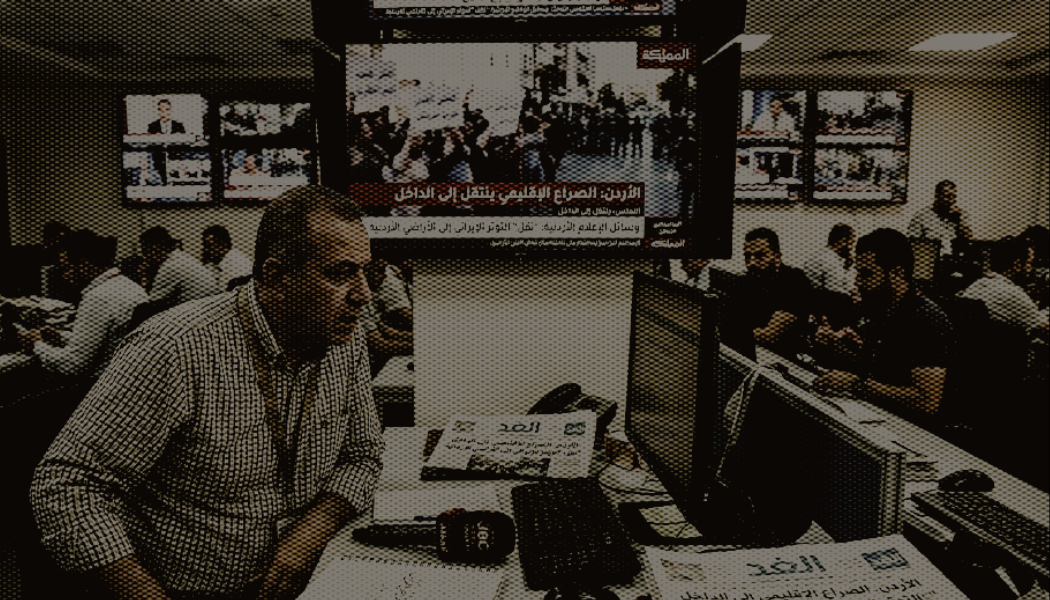
How External Actors Use Jordan’s Media Ecosystem: Mechanisms, Objectives, and Responses
How External Actors Use Jordan’s Media Ecosystem: Mechanisms, Objectives, and Responses

The Strait of Hormuz in Russian Propaganda: A Symbol of Global Western Vulnerabilit
The Strait of Hormuz in Russian Propaganda: A Symbol of Global Western Vulnerabilit

Modernisation Without Westernisation
Modernisation Without Westernisation

A Thousand-Year Conflict? Russia’s Historical Narrative as a Tool of Propaganda in the Arab World
A Thousand-Year Conflict? Russia’s Historical Narrative as a Tool of Propaganda in the Arab World

Kutrashev’s Middle East Messaging Unravels Under Pressing Questions
Kutrashev’s Middle East Messaging Unravels Under Pressing Questions
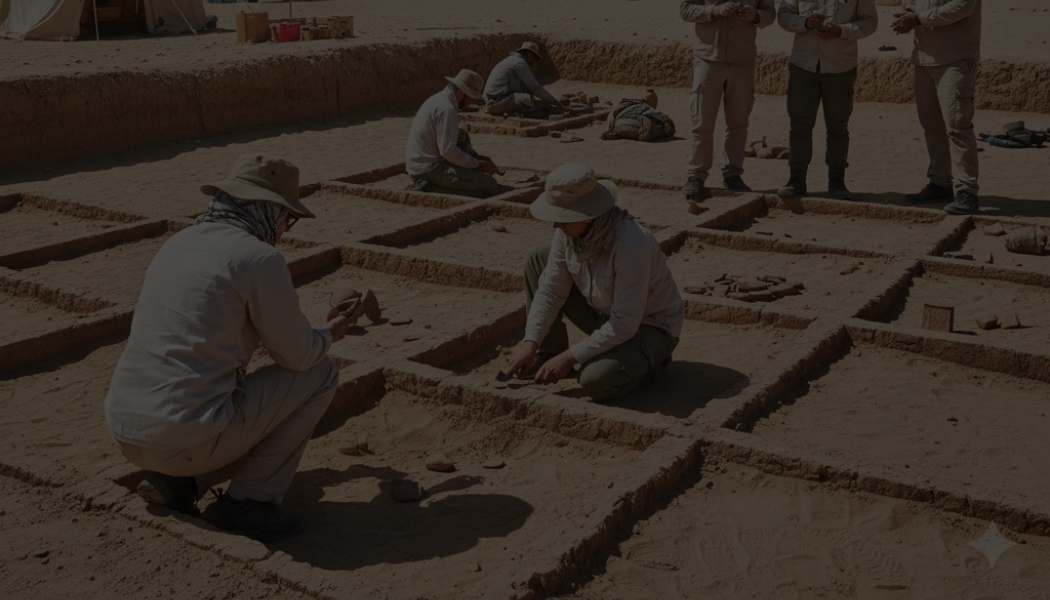
Egypt as an Arena of Information Operations – Analysis of Contemporary Influence Strategies
Egypt as an Arena of Information Operations – Analysis of Contemporary Influence Strategies

Failure of the Russian influence operation? The Shia admit that Russia was “playing with Israel” behind their backs
Failure of the Russian influence operation? The Shia admit that Russia was “playing with Israel” behind their backs