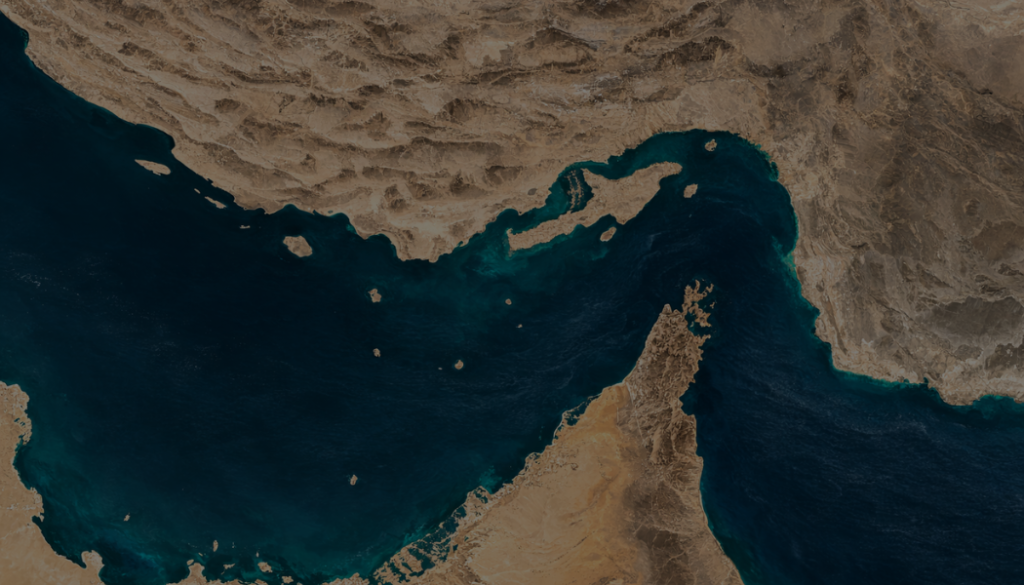
Oto wierne, profesjonalne tłumaczenie Twojego tekstu na język angielski, zachowujące pełną treść, strukturę oraz specjalistyczną terminologię z zakresu geopolityki i analizy mediów. The Strait of Hormuz in Russian Propaganda as a Symbol of Global Western Vulnerability The Strait of Hormuz belongs to the most important strategic points of the modern world. Its significance extends far beyond the regional dimension, as the security of navigation in this area remains directly linked to the stability of energy supplies, the security of international trade, and the economic health of Western nations. For this reason, the subject of Hormuz has become a fertile field for information influence, especially in propaganda messages constructed around the conflict involving Iran, the United States, and Israel. In the Russian information space, this strait is presented as a symbol of the West's strategic weakness. These narratives serve to reinforce the message about the West's alleged loss of control over international security, Europe's vulnerability to energy shortages, and the inevitable costs of policies supporting military actions against Iran. As a result, the Strait of Hormuz is transformed from a geostrategic object into a tool of information warfare, intended to affect the audience's emotions, their perception of risk, and their assessment of the West's credibility. Particular attention should be paid to the high level of complexity of the analyzed propaganda message. It is not built in the form of a single, coherent narrative but is created by combining many fragmentary communications. These include short reports on military actions, political commentaries, economic information, quotes from Western media, and selected statistical data regarding maritime transport and the energy market. In this message, true information, partially true information, and interpretations of a speculative or false nature are juxtaposed. Their selective combination under conditions of high information dynamics and intense media exposure creates an impression of information chaos. In such a situation, the recipient receives many seemingly independent signals leading to a single conclusion, according to which the West is losing control over the situation, and the escalation of the conflict will lead to serious economic consequences on a global scale. This type of message construction corresponds to techniques used in psychological operations, in which the key role is played not by a single piece of information, but by the effect of the accumulation of informational stimuli reinforcing specific emotions. In the analyzed case, these are primarily a sense of threat, uncertainty, and the conviction of a loss of stability. This analysis focuses on the ways in which Russian propaganda utilizes the theme of the Strait of Hormuz and its related maritime routes to build an image of Russia as a potential guarantor of stability in a situation presented as the global vulnerability of Western states. Special attention has been devoted to the mechanisms of attributing responsibility for the escalation of the conflict, the economization of fear, the militarization of the audience's imagination, and the legitimization of the Russian position through a feigned defense of stability and international law. The Context of the Conflict and Its Interpretation in Propaganda In the analyzed Kremlin propaganda messages, military operations by the United States and Israel against Iran are presented as "unjustified aggression," the consequence of which is to be the destabilization of the international order. Such a narrative construction deliberately omits the broader strategic context. Military actions against Iran are primarily linked to concerns regarding the development of its nuclear program, the expansion of its missile capabilities, and the activity of regional military structures supported by Tehran, such as Hezbollah in Lebanon, Shia militias in Iraq, or the Houthi movement in Yemen. Military operations conducted against Iran are therefore intended to limit this state's ability to destabilize the region and counteract the possibility of Tehran obtaining nuclear potential. In Russian propaganda, however, this context is marginalized or completely omitted. The message focuses on presenting the conflict as a unilateral escalation by the West, which is intended to serve as evidence of its aggressive policy. In the analyzed materials, phrases about "unjustified American-Israeli aggression against Iran" appear, while the actions of Tehran and its allies are presented as a justified defensive reaction. This type of communication maneuver allows for the shifting of responsibility for economic consequences, including the rise in energy prices or disruptions in maritime transport, onto Western states, rather than onto the actual circumstances that led to the decision on operations against Iran. The Strait of Hormuz as a Symbol of Economic Pressure A central element of the analyzed propaganda messages is the presentation of the Strait of Hormuz as a strategic lever that Iran can use against the global economy. Propaganda materials regularly emphasize that a significant portion of the world's transport of oil and liquefied gas flows through the strait, and its potential blockade would lead to a sharp increase in energy prices. An example is a communication appearing in the analyzed material suggesting that "Iran can win the war if it raises oil prices even further," which would supposedly force the United States to halt military operations. The information about the release of hundreds of millions of barrels of oil from strategic reserves by International Energy Agency countries is used in a similar way. In the propaganda message, this is not presented as part of a mechanism to stabilize the energy market, but as evidence of the destabilization and panic of Western states. This narrative is reinforced by repeatedly exposed messages concerning the rise in fuel prices in European countries. This type of maneuver moves the conflict from the level of geopolitics to the level of the daily experience of the recipients. Expansion of the Threat: Bab al-Mandab and the Red Sea An important element of the propagandistic construction of the message is the expansion of the field of threat beyond the Strait of Hormuz itself. The analyzed materials also contain references to the Bab al-Mandab Strait at the entrance to the Red Sea, where, according to the presented narrative, the actions of the Yemeni Houthis may further threaten shipping. In the analyzed propaganda cycle, it is pointed out that approximately 20,000 ships pass through this route annually, and oil transport reaches about 6.2 million barrels per day. Propaganda gives this information a clear suggestive meaning, emphasizing that a potential blockade of the strait would force ships to circumnavigate Africa via the Cape of Good Hope. This would mean lengthening voyages by up to two weeks and a significant increase in transport costs. Juxtaposing this data with reports of previous Houthi attacks on merchant ships in the Red Sea is intended to reinforce the impression that the West is facing a multidimensional maritime security crisis that it is unable to effectively control. The Narrative of Western Weakness Another significant element of the analyzed message is the building of an image of the West as an aggressive structure that is simultaneously destabilized and unprepared for confrontation. The materials contain messages discrediting Western weapon systems, as well as numerous unverifiable or false pieces of information regarding the scale of losses and damage to the United States Navy. A similar function is served by the disseminated reports about rising energy prices in Europe and appeals directed by European governments to citizens to limit energy consumption. The analyzed material includes, among other things, information about a call from the Danish energy minister to save energy in connection with rising oil prices. Juxtaposing these types of messages with information about the potential blockade of maritime routes is intended to create an impression of a mounting crisis that is gradually slipping out of the control of Western states. Militarization of the Recipient's Imagination In the analyzed messages, a significant role is also played by the detailed description of Iran's military capabilities. In one of the propaganda materials, the possibility of the Iranian Revolutionary Guard Corps using swarms of Ashura-class fast attack boats armed with anti-ship missiles was presented. Their speed, range, and low production costs are emphasized, suggesting that even small units can pose a serious threat to large tankers and warships. A similar function is served by information about strike drones or the alleged shooting down of an Israeli Hermes-900 unmanned aerial vehicle. Such messages are intended to reinforce the conviction that Iran possesses asymmetric military capabilities that can effectively hinder the actions of the United States and its allies. Authorization of the Message via Western Media A characteristic feature of the analyzed material is also the referencing of Western media and experts. The text contains references to publications in the Wall Street Journal, reports from CNBC, or expert comments quoted by Fox News. In Russian propaganda, such references are of particular importance because they allow the message to be given a semblance of credibility and suggest that even Western sources confirm the theses about the growing weakness of the West and the alleged "lost war in Iran." Russia as a "Rational" Actor The analyzed messages also include the position of the Russian Ministry of Foreign Affairs, according to which Moscow recognizes Iran's right to self-defense and calls for an end to the escalation. Such communications are intended to build an image of Russia as a rational and responsible state that allegedly strives to stabilize the international situation. In practice, this is an element of a broader information strategy in which Moscow tries to present itself as a counterweight to the supposedly destabilizing policy of the West. This narrative is simultaneously intended to distract attention from Russia's actions in other regions, including its aggression against Ukraine. An essential element of the analyzed propaganda construction is the way in which Russia uses narratives concerning the Strait of Hormuz and the destabilization of the Middle East to build its own image as a supposed guarantor of international security and stability. In these messages, Moscow is presented as a responsible and rational actor that calls for the limitation of escalation, recognizes Iran's right to self-defense, and appeals for diplomatic solutions. In practice, this maneuver consists of the contrastive juxtaposition of two images. On one hand, the "aggressive and irresponsible" West is presented, which allegedly leads the region to destabilization. On the other hand, Russia appears, presented as a state that foresees the consequences of escalation and calls for the maintenance of strategic balance. This type of narrative is manipulative in nature because it omits Russia's actual actions destabilizing the international order, including the aggression against Ukraine and the support of actors undermining regional stability, including Iran. As a result, propaganda uses the crisis around the Strait of Hormuz to create a false image of Russia as a state responsible for maintaining global stability, while in reality, this message constitutes an element of a broader information strategy intended to undermine the West's credibility and strengthen Moscow's position in the perception of the audience. Conclusions The analysis of propaganda messages concerning the Strait of Hormuz shows that in the Russian information space, this motif performs a function much broader than merely describing the strategic importance of one of the world's most important transport routes. The Strait of Hormuz becomes a symbol that, through the use of selective persuasion, is intended to illustrate the global vulnerability of the West. It functions as a point of reference allowing for the connection of energy security issues, economic stability, and the military capabilities of the United States into one coherent image of a systemic crisis. As a result, the recipient may get the impression that the conflict around Iran constitutes evidence of the West's waning control over the global security system, and every subsequent tension in the Middle East may lead to serious economic shocks in Europe. Such a picture of the situation is an element of the Russian information strategy, the goal of which remains the undermining of trust in Western security institutions and the reinforcement of the narrative about the coming crisis of the international order.
The Strait of Hormuz in Russian Propaganda: A Symbol of Global Western Vulnerabilit

The Strait of Hormuz in Russian Propaganda: A Symbol of Global Western Vulnerabilit

How Chinese Narratives Reframe the West and Build China’s Appeal in the Global South Chinese communication directed at the Global South does not function as a collection of isolated messages. It operates as a coherent narrative system. Its strength lies not in promoting a single claim, but in combining emotional cues, identity-based references and development-oriented promises into a comprehensive story about the international order. Within this story, the West—particularly the United States and its allies—is portrayed as a structural source of pressure. Relations with weaker states are framed as inherently asymmetrical, shaped by domination, political conditionality, selective use of international law and instrumentalisation of security. China, by contrast, is presented not as a challenger seeking to replace Western leadership, but as an alternative partner offering development, respect and modernisation without imposed values. The purpose of this article is not to summarise individual Chinese publications or media outputs. Instead, it examines the recurring pattern behind them: a methodical delegitimisation of the West, a gradual normalisation of China’s presence, and the promotion of “sovereignty and development” as a shared mission of the Global South. Two Messages, One Influence Operation Chinese influence operations aimed at the Global South rarely rely on a single text or argument. They function as narrative packages. One component works to erode trust in the West by activating moral and emotional frames. Another presents China as a practical and dignified alternative. The audience is not given explicit instructions. Rather, it is guided toward a conclusion through associations, moral cues and ready-made interpretations that appear to emerge organically. In this logic, the West becomes a source of risk, while China is positioned as an opportunity. The effectiveness of the operation lies precisely in the fact that the final judgement feels self-generated. Delegitimising the Competitor, Promoting the Model The basic architecture of Chinese messaging toward the Global South follows a consistent sequence. First, confidence in Western actors is weakened. Only then is the Chinese model introduced as a viable alternative. Criticism of the United States or Europe is not an end in itself. It serves to shift the reference point for development, security and prestige. This process functions like a funnel. It begins with emotions—resentment, fear, frustration, a sense of injustice or the discomfort of being treated as a periphery. Over time, these emotions are channelled into a rationalised political posture: greater distance from the West, increased tolerance for Chinese presence, and acceptance of China as a long-term institutional, economic and cultural partner. The critical advantage of this method is that the audience is meant to feel it has arrived at these conclusions independently. The “Voice of the People” as a Credibility Tool A key element of this strategy is the construction of credibility through the appearance of grassroots opinion. Chinese narratives frequently draw on social media reactions, humour, irony, memes and public sentiment as entry points. This approach is particularly effective in regions where audiences are sceptical of official propaganda but value what is perceived as authentic public voice. This technique serves multiple purposes at once. It shields the message from accusations of propaganda by framing it as popular opinion rather than state instruction. It creates social proof, suggesting that a widely shared reaction must reflect truth. It also allows political claims to be embedded in humour, lowering the audience’s critical guard. In this process, tools of internet culture are transformed into political arguments. The factual accuracy of a joke matters less than its appropriation as a diagnosis of reality. The Hegemon Frame: The West as an Instrumental Actor One of the strongest narrative axes depicts the West as a hegemon that reduces states to resources and utility. International relations are framed not as partnerships, but as systems of extraction. In this logic, the more strategically valuable a country becomes, the greater the risk it faces. Value is no longer associated with protection, but with vulnerability. This framing is carefully aligned with sensitivities across the Global South, including colonial memory, experiences of sanctions and conditionality, and long-standing distrust of great power intentions. The West ceases to appear as a community of values and instead functions as a mechanism that integrates weaker actors on unequal terms. Even neutral gestures can be interpreted within this logic as paternalism or reconnaissance. Selective Legalism and Moral Shaming Another recurring technique relies on moral language drawn from international law and the principle of sovereign equality. Western actors are portrayed as proclaiming norms while violating them in practice, speaking of partnership while pursuing domination, and invoking progress while acting in narrow self-interest. This produces a strong emotional response rooted in perceptions of hypocrisy and injustice. This is not a neutral debate over interpretation. It is an operation of delegitimisation. Once the West is framed as inherently unreliable, factual disputes lose relevance. The actor itself becomes discredited by definition. Fear as Leverage: Visibility as a Risk Among the most operational emotions in this narrative system is fear—not abstract fear, but fear framed as political prudence. The source of danger is not only overt aggression, but visibility itself. A state that gains attention becomes exposed to pressure, coercion or forced alignment. This logic reinforces caution toward Western engagement, increases the appeal of neutrality and strategic autonomy, and prepares the ground for an alternative partner promising respect and non-interference. Psychologically, it supports the conclusion that distance from the West is the safest option. “Modernisation Without Westernisation” as an Identity Offer Delegitimising the West would be insufficient without a positive proposition. China offers one in the form of “modernisation without Westernisation”. This is not merely a development claim. It functions as an identity product. The audience receives moral permission to pursue modernity on its own terms, without cultural imitation or a sense of civilisational inferiority. Psychologically, this strengthens dignity and reduces perceived subordination. Politically, it legitimises governance models and public policies that diverge from Western standards. Geopolitically, it justifies choosing China as a partner presented as respecting diverse development paths. Implicitly, the message suggests that Western modernisation requires value transformation, while Chinese modernisation is presented as a technical process rather than a civilisational project. Transferring Authority Through Southern Voices To avoid sounding external, Chinese narratives increasingly rely on voices presented as coming from the Global South itself. Experts, officials, consultants and academics from the region are amplified not only to inform, but to transfer authority. The argument acquires a local accent even when its structure was designed elsewhere. This reduces suspicion of propaganda, creates an impression of dialogue rather than instruction, and generates elite-level social proof. The audience should feel represented, not targeted. Normalising Presence Through Institutions and Exchanges Chinese self-promotion does not end with slogans. A key component is the normalisation of long-term presence. Cooperation is framed as irreversible, embedded in institutions, dialogue formats, exchange programmes, training initiatives and narratives of intergenerational friendship. This matters because influence is not only about persuasion, but about habituation. Once Chinese presence becomes part of the expected landscape, critical thresholds rise. Concerns over dependency, asymmetry or political influence are gradually overshadowed by the language of routine development cooperation. “Win-Win” as a Semantic Shield The concept of “mutual benefit” functions as a semantic umbrella under which conflicting interests are reconciled rhetorically. It deflects questions about costs, control over supply chains, standards, resource extraction, financial terms and political consequences. When discourse is dominated by “win-win” framing, criticism can be portrayed as prejudice, Western propaganda or resistance to development itself. The debate shifts from material interests to moral intent. The Strategic Outcome Taken together, these mechanisms produce a clear result. Audiences across the Global South are encouraged to internalise three conclusions: that the West represents risk and moral inconsistency; that strategic autonomy requires distance from Western actors; and that China is a natural partner for development on sovereign terms. This does not require full alignment with China. It is sufficient to weaken pro-Western reflexes, raise the political cost of cooperation with the United States or Europe, and lower the threshold for accepting Chinese projects and narratives. In information environments, this shift is decisive. It changes not only opinions, but the framework within which reality is interpreted. The effectiveness of this operation does not depend on systematic falsification. It often relies on selection and generalisation: choosing examples that fit the hegemon narrative and transforming them into rules. Humour, irony and public reactions further reduce critical scrutiny and are later repackaged as political evidence. The audience is meant to feel it is observing a shared conclusion of the Global South, not absorbing persuasion. At the core of this strategy lies the promise of modernisation without Westernisation. For audiences, it offers dignity without imitation. For China, it creates space for exporting standards, institutions and long-term influence. Dialogue platforms, expert networks, exchange programmes and training initiatives are not decorative elements. They constitute an infrastructure of influence that gradually shifts normative baselines. The final objective is not uniform pro-China sentiment. It is the recalibration of what appears reasonable, safe and beneficial. By increasing the perceived costs of Western alignment and reducing resistance to Chinese engagement, the narrative reshapes the strategic environment itself.
Modernisation Without Westernisation

Modernisation Without Westernisation
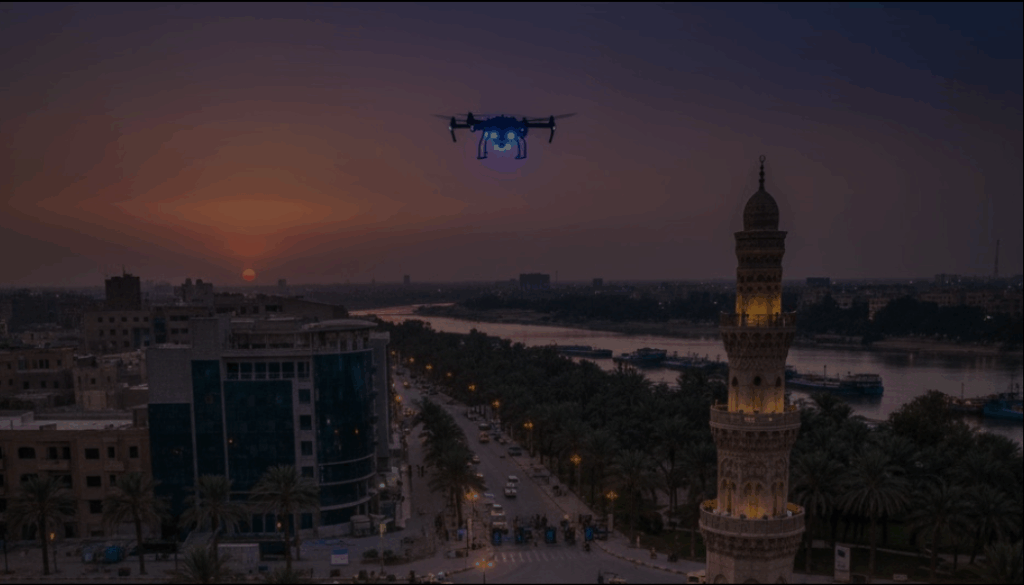
RT Arabic uses anonymous “Polish” voices to spread anti-Ukrainian narratives

RT Arabic uses anonymous “Polish” voices to spread anti-Ukrainian narratives

“Western” voice in the service of Russian propaganda: the case of Warren Thornton in the Arab infoshere

“Western” voice in the service of Russian propaganda: the case of Warren Thornton in the Arab infoshere

A Voice from Lebanon: How to Restore Ethics to the Public Sphere and Overcome Extremism

A Voice from Lebanon: How to Restore Ethics to the Public Sphere and Overcome Extremism
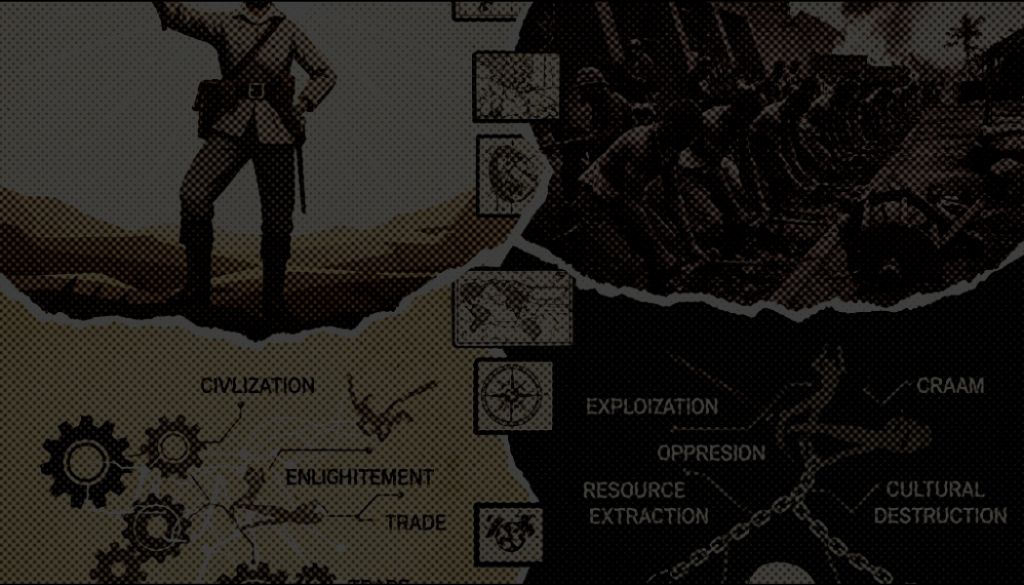
The Kremlin’s Historical Revisionism: How Russian Disinformation in Arabic Links Nazism to American Roots
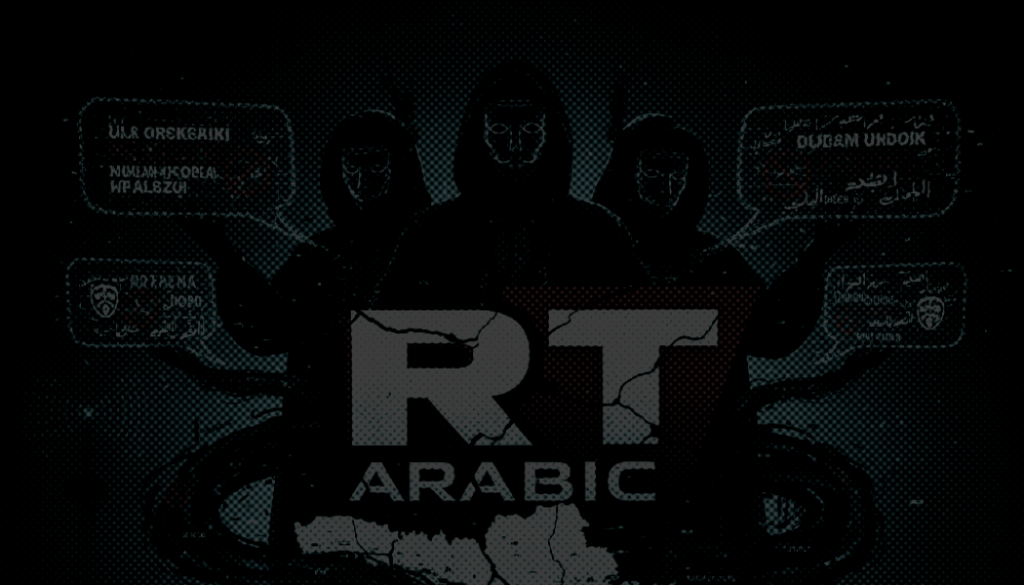
The Kremlin’s Historical Revisionism: How Russian Disinformation in Arabic Links Nazism to American Roots

“Poland Is Organising a Caliphate”: A Provocation by the Federal Security Service (FSB)

“Poland Is Organising a Caliphate”: A Provocation by the Federal Security Service (FSB)
Why Does Iran Need a “Partner” Like Russia?

Why Does Iran Need a “Partner” Like Russia?
Information Warfare Online: Digital Disinformation in Egypt and African Countries

Information Warfare Online: Digital Disinformation in Egypt and African Countries
A Thousand-Year Conflict? Russia’s Historical Narrative as a Tool of Propaganda in the Arab World

A Thousand-Year Conflict? Russia’s Historical Narrative as a Tool of Propaganda in the Arab World

Kutrashev’s Middle East Messaging Unravels Under Pressing Questions

Kutrashev’s Middle East Messaging Unravels Under Pressing Questions

Egypt as an Arena of Information Operations – Analysis of Contemporary Influence Strategies
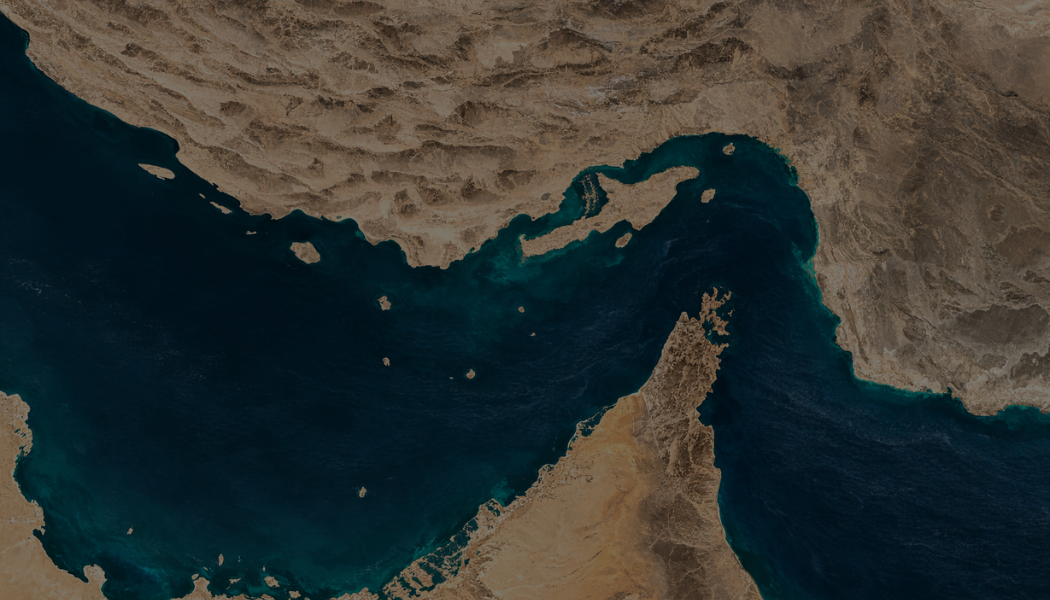

Egypt as an Arena of Information Operations – Analysis of Contemporary Influence Strategies
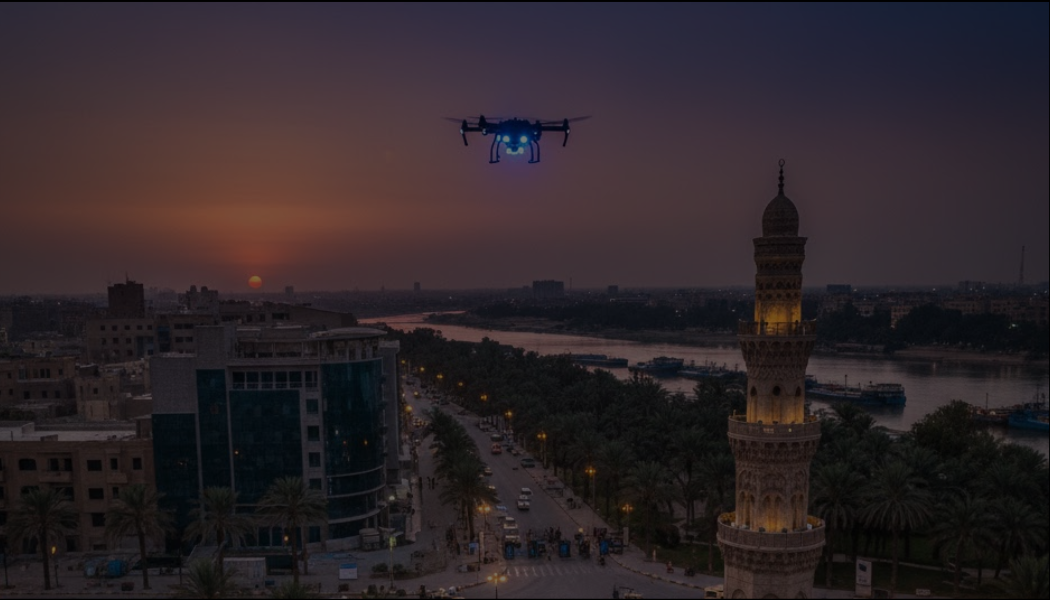
Oto wierne, profesjonalne tłumaczenie Twojego tekstu na język angielski, zachowujące pełną treść, strukturę oraz specjalistyczną terminologię z zakresu geopolityki i analizy mediów. The Strait of Hormuz in Russian Propaganda as a Symbol of Global Western Vulnerability The Strait of Hormuz belongs to the most important strategic points of the modern world. Its significance extends far beyond the regional dimension, as the security of navigation in this area remains directly linked to the stability of energy supplies, the security of international trade, and the economic health of Western nations. For this reason, the subject of Hormuz has become a fertile field for information influence, especially in propaganda messages constructed around the conflict involving Iran, the United States, and Israel. In the Russian information space, this strait is presented as a symbol of the West's strategic weakness. These narratives serve to reinforce the message about the West's alleged loss of control over international security, Europe's vulnerability to energy shortages, and the inevitable costs of policies supporting military actions against Iran. As a result, the Strait of Hormuz is transformed from a geostrategic object into a tool of information warfare, intended to affect the audience's emotions, their perception of risk, and their assessment of the West's credibility. Particular attention should be paid to the high level of complexity of the analyzed propaganda message. It is not built in the form of a single, coherent narrative but is created by combining many fragmentary communications. These include short reports on military actions, political commentaries, economic information, quotes from Western media, and selected statistical data regarding maritime transport and the energy market. In this message, true information, partially true information, and interpretations of a speculative or false nature are juxtaposed. Their selective combination under conditions of high information dynamics and intense media exposure creates an impression of information chaos. In such a situation, the recipient receives many seemingly independent signals leading to a single conclusion, according to which the West is losing control over the situation, and the escalation of the conflict will lead to serious economic consequences on a global scale. This type of message construction corresponds to techniques used in psychological operations, in which the key role is played not by a single piece of information, but by the effect of the accumulation of informational stimuli reinforcing specific emotions. In the analyzed case, these are primarily a sense of threat, uncertainty, and the conviction of a loss of stability. This analysis focuses on the ways in which Russian propaganda utilizes the theme of the Strait of Hormuz and its related maritime routes to build an image of Russia as a potential guarantor of stability in a situation presented as the global vulnerability of Western states. Special attention has been devoted to the mechanisms of attributing responsibility for the escalation of the conflict, the economization of fear, the militarization of the audience's imagination, and the legitimization of the Russian position through a feigned defense of stability and international law. The Context of the Conflict and Its Interpretation in Propaganda In the analyzed Kremlin propaganda messages, military operations by the United States and Israel against Iran are presented as "unjustified aggression," the consequence of which is to be the destabilization of the international order. Such a narrative construction deliberately omits the broader strategic context. Military actions against Iran are primarily linked to concerns regarding the development of its nuclear program, the expansion of its missile capabilities, and the activity of regional military structures supported by Tehran, such as Hezbollah in Lebanon, Shia militias in Iraq, or the Houthi movement in Yemen. Military operations conducted against Iran are therefore intended to limit this state's ability to destabilize the region and counteract the possibility of Tehran obtaining nuclear potential. In Russian propaganda, however, this context is marginalized or completely omitted. The message focuses on presenting the conflict as a unilateral escalation by the West, which is intended to serve as evidence of its aggressive policy. In the analyzed materials, phrases about "unjustified American-Israeli aggression against Iran" appear, while the actions of Tehran and its allies are presented as a justified defensive reaction. This type of communication maneuver allows for the shifting of responsibility for economic consequences, including the rise in energy prices or disruptions in maritime transport, onto Western states, rather than onto the actual circumstances that led to the decision on operations against Iran. The Strait of Hormuz as a Symbol of Economic Pressure A central element of the analyzed propaganda messages is the presentation of the Strait of Hormuz as a strategic lever that Iran can use against the global economy. Propaganda materials regularly emphasize that a significant portion of the world's transport of oil and liquefied gas flows through the strait, and its potential blockade would lead to a sharp increase in energy prices. An example is a communication appearing in the analyzed material suggesting that "Iran can win the war if it raises oil prices even further," which would supposedly force the United States to halt military operations. The information about the release of hundreds of millions of barrels of oil from strategic reserves by International Energy Agency countries is used in a similar way. In the propaganda message, this is not presented as part of a mechanism to stabilize the energy market, but as evidence of the destabilization and panic of Western states. This narrative is reinforced by repeatedly exposed messages concerning the rise in fuel prices in European countries. This type of maneuver moves the conflict from the level of geopolitics to the level of the daily experience of the recipients. Expansion of the Threat: Bab al-Mandab and the Red Sea An important element of the propagandistic construction of the message is the expansion of the field of threat beyond the Strait of Hormuz itself. The analyzed materials also contain references to the Bab al-Mandab Strait at the entrance to the Red Sea, where, according to the presented narrative, the actions of the Yemeni Houthis may further threaten shipping. In the analyzed propaganda cycle, it is pointed out that approximately 20,000 ships pass through this route annually, and oil transport reaches about 6.2 million barrels per day. Propaganda gives this information a clear suggestive meaning, emphasizing that a potential blockade of the strait would force ships to circumnavigate Africa via the Cape of Good Hope. This would mean lengthening voyages by up to two weeks and a significant increase in transport costs. Juxtaposing this data with reports of previous Houthi attacks on merchant ships in the Red Sea is intended to reinforce the impression that the West is facing a multidimensional maritime security crisis that it is unable to effectively control. The Narrative of Western Weakness Another significant element of the analyzed message is the building of an image of the West as an aggressive structure that is simultaneously destabilized and unprepared for confrontation. The materials contain messages discrediting Western weapon systems, as well as numerous unverifiable or false pieces of information regarding the scale of losses and damage to the United States Navy. A similar function is served by the disseminated reports about rising energy prices in Europe and appeals directed by European governments to citizens to limit energy consumption. The analyzed material includes, among other things, information about a call from the Danish energy minister to save energy in connection with rising oil prices. Juxtaposing these types of messages with information about the potential blockade of maritime routes is intended to create an impression of a mounting crisis that is gradually slipping out of the control of Western states. Militarization of the Recipient's Imagination In the analyzed messages, a significant role is also played by the detailed description of Iran's military capabilities. In one of the propaganda materials, the possibility of the Iranian Revolutionary Guard Corps using swarms of Ashura-class fast attack boats armed with anti-ship missiles was presented. Their speed, range, and low production costs are emphasized, suggesting that even small units can pose a serious threat to large tankers and warships. A similar function is served by information about strike drones or the alleged shooting down of an Israeli Hermes-900 unmanned aerial vehicle. Such messages are intended to reinforce the conviction that Iran possesses asymmetric military capabilities that can effectively hinder the actions of the United States and its allies. Authorization of the Message via Western Media A characteristic feature of the analyzed material is also the referencing of Western media and experts. The text contains references to publications in the Wall Street Journal, reports from CNBC, or expert comments quoted by Fox News. In Russian propaganda, such references are of particular importance because they allow the message to be given a semblance of credibility and suggest that even Western sources confirm the theses about the growing weakness of the West and the alleged "lost war in Iran." Russia as a "Rational" Actor The analyzed messages also include the position of the Russian Ministry of Foreign Affairs, according to which Moscow recognizes Iran's right to self-defense and calls for an end to the escalation. Such communications are intended to build an image of Russia as a rational and responsible state that allegedly strives to stabilize the international situation. In practice, this is an element of a broader information strategy in which Moscow tries to present itself as a counterweight to the supposedly destabilizing policy of the West. This narrative is simultaneously intended to distract attention from Russia's actions in other regions, including its aggression against Ukraine. An essential element of the analyzed propaganda construction is the way in which Russia uses narratives concerning the Strait of Hormuz and the destabilization of the Middle East to build its own image as a supposed guarantor of international security and stability. In these messages, Moscow is presented as a responsible and rational actor that calls for the limitation of escalation, recognizes Iran's right to self-defense, and appeals for diplomatic solutions. In practice, this maneuver consists of the contrastive juxtaposition of two images. On one hand, the "aggressive and irresponsible" West is presented, which allegedly leads the region to destabilization. On the other hand, Russia appears, presented as a state that foresees the consequences of escalation and calls for the maintenance of strategic balance. This type of narrative is manipulative in nature because it omits Russia's actual actions destabilizing the international order, including the aggression against Ukraine and the support of actors undermining regional stability, including Iran. As a result, propaganda uses the crisis around the Strait of Hormuz to create a false image of Russia as a state responsible for maintaining global stability, while in reality, this message constitutes an element of a broader information strategy intended to undermine the West's credibility and strengthen Moscow's position in the perception of the audience. Conclusions The analysis of propaganda messages concerning the Strait of Hormuz shows that in the Russian information space, this motif performs a function much broader than merely describing the strategic importance of one of the world's most important transport routes. The Strait of Hormuz becomes a symbol that, through the use of selective persuasion, is intended to illustrate the global vulnerability of the West. It functions as a point of reference allowing for the connection of energy security issues, economic stability, and the military capabilities of the United States into one coherent image of a systemic crisis. As a result, the recipient may get the impression that the conflict around Iran constitutes evidence of the West's waning control over the global security system, and every subsequent tension in the Middle East may lead to serious economic shocks in Europe. Such a picture of the situation is an element of the Russian information strategy, the goal of which remains the undermining of trust in Western security institutions and the reinforcement of the narrative about the coming crisis of the international order.
China

The Strait of Hormuz in Russian Propaganda: A Symbol of Global Western Vulnerabilit

The Strait of Hormuz belongs to the most important strategic points of the modern world.…
How Chinese Narratives Reframe the West and Build China’s Appeal in the Global South Chinese communication directed at the Global South does not function as a collection of isolated messages. It operates as a coherent narrative system. Its strength lies not in promoting a single claim, but in combining emotional cues, identity-based references and development-oriented promises into a comprehensive story about the international order. Within this story, the West—particularly the United States and its allies—is portrayed as a structural source of pressure. Relations with weaker states are framed as inherently asymmetrical, shaped by domination, political conditionality, selective use of international law and instrumentalisation of security. China, by contrast, is presented not as a challenger seeking to replace Western leadership, but as an alternative partner offering development, respect and modernisation without imposed values. The purpose of this article is not to summarise individual Chinese publications or media outputs. Instead, it examines the recurring pattern behind them: a methodical delegitimisation of the West, a gradual normalisation of China’s presence, and the promotion of “sovereignty and development” as a shared mission of the Global South. Two Messages, One Influence Operation Chinese influence operations aimed at the Global South rarely rely on a single text or argument. They function as narrative packages. One component works to erode trust in the West by activating moral and emotional frames. Another presents China as a practical and dignified alternative. The audience is not given explicit instructions. Rather, it is guided toward a conclusion through associations, moral cues and ready-made interpretations that appear to emerge organically. In this logic, the West becomes a source of risk, while China is positioned as an opportunity. The effectiveness of the operation lies precisely in the fact that the final judgement feels self-generated. Delegitimising the Competitor, Promoting the Model The basic architecture of Chinese messaging toward the Global South follows a consistent sequence. First, confidence in Western actors is weakened. Only then is the Chinese model introduced as a viable alternative. Criticism of the United States or Europe is not an end in itself. It serves to shift the reference point for development, security and prestige. This process functions like a funnel. It begins with emotions—resentment, fear, frustration, a sense of injustice or the discomfort of being treated as a periphery. Over time, these emotions are channelled into a rationalised political posture: greater distance from the West, increased tolerance for Chinese presence, and acceptance of China as a long-term institutional, economic and cultural partner. The critical advantage of this method is that the audience is meant to feel it has arrived at these conclusions independently. The “Voice of the People” as a Credibility Tool A key element of this strategy is the construction of credibility through the appearance of grassroots opinion. Chinese narratives frequently draw on social media reactions, humour, irony, memes and public sentiment as entry points. This approach is particularly effective in regions where audiences are sceptical of official propaganda but value what is perceived as authentic public voice. This technique serves multiple purposes at once. It shields the message from accusations of propaganda by framing it as popular opinion rather than state instruction. It creates social proof, suggesting that a widely shared reaction must reflect truth. It also allows political claims to be embedded in humour, lowering the audience’s critical guard. In this process, tools of internet culture are transformed into political arguments. The factual accuracy of a joke matters less than its appropriation as a diagnosis of reality. The Hegemon Frame: The West as an Instrumental Actor One of the strongest narrative axes depicts the West as a hegemon that reduces states to resources and utility. International relations are framed not as partnerships, but as systems of extraction. In this logic, the more strategically valuable a country becomes, the greater the risk it faces. Value is no longer associated with protection, but with vulnerability. This framing is carefully aligned with sensitivities across the Global South, including colonial memory, experiences of sanctions and conditionality, and long-standing distrust of great power intentions. The West ceases to appear as a community of values and instead functions as a mechanism that integrates weaker actors on unequal terms. Even neutral gestures can be interpreted within this logic as paternalism or reconnaissance. Selective Legalism and Moral Shaming Another recurring technique relies on moral language drawn from international law and the principle of sovereign equality. Western actors are portrayed as proclaiming norms while violating them in practice, speaking of partnership while pursuing domination, and invoking progress while acting in narrow self-interest. This produces a strong emotional response rooted in perceptions of hypocrisy and injustice. This is not a neutral debate over interpretation. It is an operation of delegitimisation. Once the West is framed as inherently unreliable, factual disputes lose relevance. The actor itself becomes discredited by definition. Fear as Leverage: Visibility as a Risk Among the most operational emotions in this narrative system is fear—not abstract fear, but fear framed as political prudence. The source of danger is not only overt aggression, but visibility itself. A state that gains attention becomes exposed to pressure, coercion or forced alignment. This logic reinforces caution toward Western engagement, increases the appeal of neutrality and strategic autonomy, and prepares the ground for an alternative partner promising respect and non-interference. Psychologically, it supports the conclusion that distance from the West is the safest option. “Modernisation Without Westernisation” as an Identity Offer Delegitimising the West would be insufficient without a positive proposition. China offers one in the form of “modernisation without Westernisation”. This is not merely a development claim. It functions as an identity product. The audience receives moral permission to pursue modernity on its own terms, without cultural imitation or a sense of civilisational inferiority. Psychologically, this strengthens dignity and reduces perceived subordination. Politically, it legitimises governance models and public policies that diverge from Western standards. Geopolitically, it justifies choosing China as a partner presented as respecting diverse development paths. Implicitly, the message suggests that Western modernisation requires value transformation, while Chinese modernisation is presented as a technical process rather than a civilisational project. Transferring Authority Through Southern Voices To avoid sounding external, Chinese narratives increasingly rely on voices presented as coming from the Global South itself. Experts, officials, consultants and academics from the region are amplified not only to inform, but to transfer authority. The argument acquires a local accent even when its structure was designed elsewhere. This reduces suspicion of propaganda, creates an impression of dialogue rather than instruction, and generates elite-level social proof. The audience should feel represented, not targeted. Normalising Presence Through Institutions and Exchanges Chinese self-promotion does not end with slogans. A key component is the normalisation of long-term presence. Cooperation is framed as irreversible, embedded in institutions, dialogue formats, exchange programmes, training initiatives and narratives of intergenerational friendship. This matters because influence is not only about persuasion, but about habituation. Once Chinese presence becomes part of the expected landscape, critical thresholds rise. Concerns over dependency, asymmetry or political influence are gradually overshadowed by the language of routine development cooperation. “Win-Win” as a Semantic Shield The concept of “mutual benefit” functions as a semantic umbrella under which conflicting interests are reconciled rhetorically. It deflects questions about costs, control over supply chains, standards, resource extraction, financial terms and political consequences. When discourse is dominated by “win-win” framing, criticism can be portrayed as prejudice, Western propaganda or resistance to development itself. The debate shifts from material interests to moral intent. The Strategic Outcome Taken together, these mechanisms produce a clear result. Audiences across the Global South are encouraged to internalise three conclusions: that the West represents risk and moral inconsistency; that strategic autonomy requires distance from Western actors; and that China is a natural partner for development on sovereign terms. This does not require full alignment with China. It is sufficient to weaken pro-Western reflexes, raise the political cost of cooperation with the United States or Europe, and lower the threshold for accepting Chinese projects and narratives. In information environments, this shift is decisive. It changes not only opinions, but the framework within which reality is interpreted. The effectiveness of this operation does not depend on systematic falsification. It often relies on selection and generalisation: choosing examples that fit the hegemon narrative and transforming them into rules. Humour, irony and public reactions further reduce critical scrutiny and are later repackaged as political evidence. The audience is meant to feel it is observing a shared conclusion of the Global South, not absorbing persuasion. At the core of this strategy lies the promise of modernisation without Westernisation. For audiences, it offers dignity without imitation. For China, it creates space for exporting standards, institutions and long-term influence. Dialogue platforms, expert networks, exchange programmes and training initiatives are not decorative elements. They constitute an infrastructure of influence that gradually shifts normative baselines. The final objective is not uniform pro-China sentiment. It is the recalibration of what appears reasonable, safe and beneficial. By increasing the perceived costs of Western alignment and reducing resistance to Chinese engagement, the narrative reshapes the strategic environment itself.
China
Modernisation Without Westernisation
China
RT Arabic uses anonymous “Polish” voices to spread anti-Ukrainian narratives
China
“Western” voice in the service of Russian propaganda: the case of Warren Thornton in the Arab infoshere