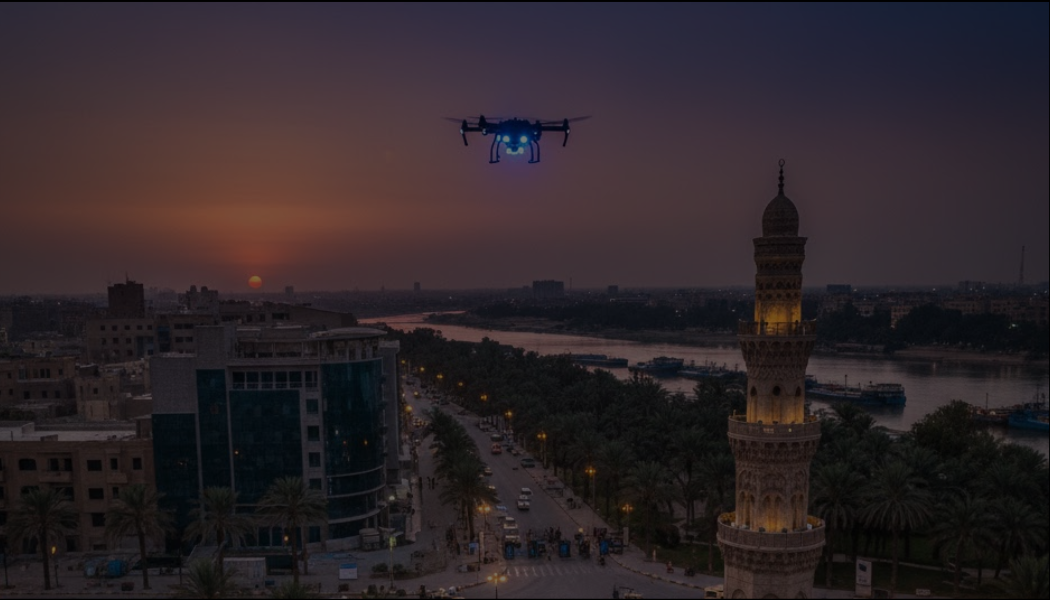
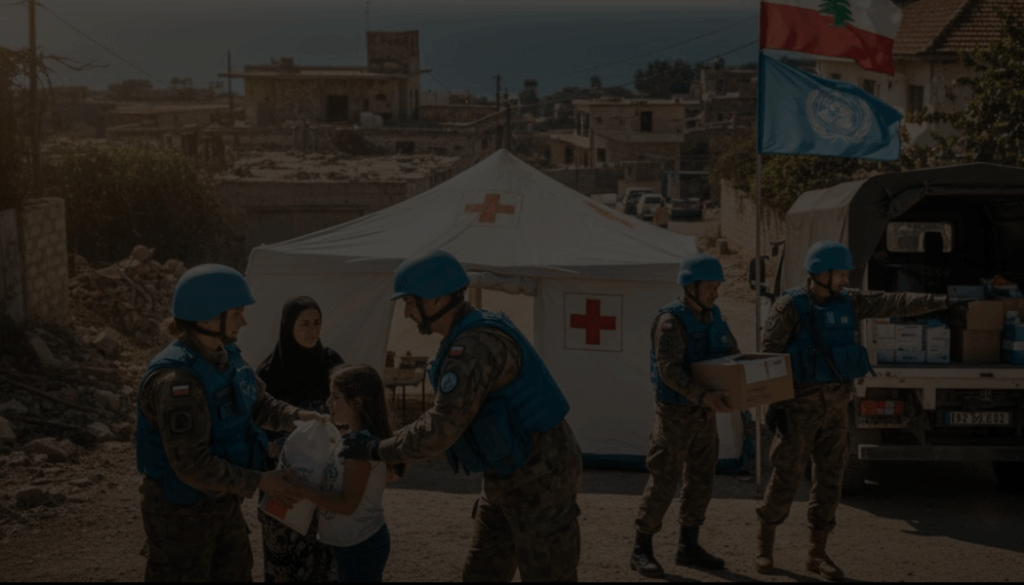
تقرير: أمن البيئة المعلوماتية في لبنان

تقرير: أمن البيئة المعلوماتية في لبنان
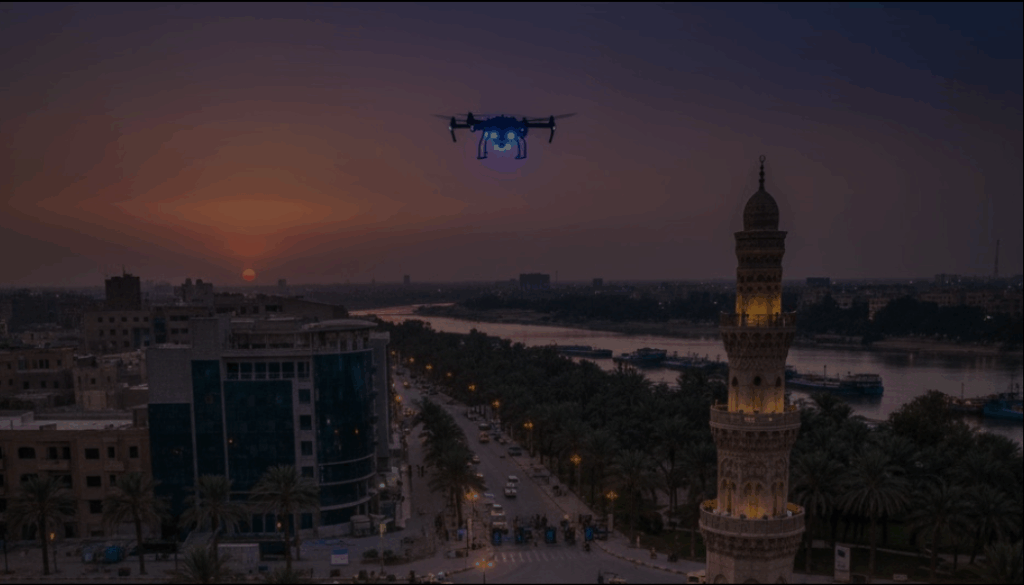
استخدام قناة “آر تي العربية” لأصوات “بولندية” مجهولة لنشر روايات معادية لأوكرانيا

استخدام قناة “آر تي العربية” لأصوات “بولندية” مجهولة لنشر روايات معادية لأوكرانيا

“صوت غربي” في خدمة الدعاية الروسية: حالة وارن ثورنتون في الفضاء الإعلامي العربي

“صوت غربي” في خدمة الدعاية الروسية: حالة وارن ثورنتون في الفضاء الإعلامي العربي

الكرملين والتاريخ كسلاح: كيف تربط الدعاية الروسية في العالم العربي النازية بأمريكا

الكرملين والتاريخ كسلاح: كيف تربط الدعاية الروسية في العالم العربي النازية بأمريكا

لماذا اتهمت روسيا بولندا بدعم الإرهاب؟ تحليل لرسالة دعائية موجّهة إلى الدول العربية

لماذا اتهمت روسيا بولندا بدعم الإرهاب؟ تحليل لرسالة دعائية موجّهة إلى الدول العربية
لماذا تحتاج إيران إلى “حليف” مثل روسيا؟

لماذا تحتاج إيران إلى “حليف” مثل روسيا؟

الحرب على السرديات في مصر كيف تميّز الدعاية قبل أن تميّزك هي؟

الحرب على السرديات في مصر كيف تميّز الدعاية قبل أن تميّزك هي؟

لماذا تشوّه روسيا صورة بولندا في العالم العربي؟ تحليل لفيلم دعائي بعنوان “صراعٌ منذ ألف عام”

لماذا تشوّه روسيا صورة بولندا في العالم العربي؟ تحليل لفيلم دعائي بعنوان “صراعٌ منذ ألف عام”

رسائل كوتراشيف حول الشرق الأوسط تنهار تحت وطأة الأسئلة الملحة

رسائل كوتراشيف حول الشرق الأوسط تنهار تحت وطأة الأسئلة الملحة

مصر كساحة للعمليات الإعلامية – تحليل استراتيجيات التأثير المعاصرة

مصر كساحة للعمليات الإعلامية – تحليل استراتيجيات التأثير المعاصرة

فشل العملية التأثيرية الروسية؟ يعترف الشيعة بأن روسيا “كانت تلعب مع إسرائيل” من وراء ظهورهم

فشل العملية التأثيرية الروسية؟ يعترف الشيعة بأن روسيا “كانت تلعب مع إسرائيل” من وراء ظهورهم

فضح الرواية الروسية عن الاستعمار الجديد: تحليل لدول منطقة الشرق الأوسط وشمال إفريقي

فضح الرواية الروسية عن الاستعمار الجديد: تحليل لدول منطقة الشرق الأوسط وشمال إفريقي

How Chinese Narratives Reframe the West and Build China’s Appeal in the Global South Chinese communication directed at the Global South does not function as a collection of isolated messages. It operates as a coherent narrative system. Its strength lies not in promoting a single claim, but in combining emotional cues, identity-based references and development-oriented promises into a comprehensive story about the international order. Within this story, the West—particularly the United States and its allies—is portrayed as a structural source of pressure. Relations with weaker states are framed as inherently asymmetrical, shaped by domination, political conditionality, selective use of international law and instrumentalisation of security. China, by contrast, is presented not as a challenger seeking to replace Western leadership, but as an alternative partner offering development, respect and modernisation without imposed values. The purpose of this article is not to summarise individual Chinese publications or media outputs. Instead, it examines the recurring pattern behind them: a methodical delegitimisation of the West, a gradual normalisation of China’s presence, and the promotion of “sovereignty and development” as a shared mission of the Global South. Two Messages, One Influence Operation Chinese influence operations aimed at the Global South rarely rely on a single text or argument. They function as narrative packages. One component works to erode trust in the West by activating moral and emotional frames. Another presents China as a practical and dignified alternative. The audience is not given explicit instructions. Rather, it is guided toward a conclusion through associations, moral cues and ready-made interpretations that appear to emerge organically. In this logic, the West becomes a source of risk, while China is positioned as an opportunity. The effectiveness of the operation lies precisely in the fact that the final judgement feels self-generated. Delegitimising the Competitor, Promoting the Model The basic architecture of Chinese messaging toward the Global South follows a consistent sequence. First, confidence in Western actors is weakened. Only then is the Chinese model introduced as a viable alternative. Criticism of the United States or Europe is not an end in itself. It serves to shift the reference point for development, security and prestige. This process functions like a funnel. It begins with emotions—resentment, fear, frustration, a sense of injustice or the discomfort of being treated as a periphery. Over time, these emotions are channelled into a rationalised political posture: greater distance from the West, increased tolerance for Chinese presence, and acceptance of China as a long-term institutional, economic and cultural partner. The critical advantage of this method is that the audience is meant to feel it has arrived at these conclusions independently. The “Voice of the People” as a Credibility Tool A key element of this strategy is the construction of credibility through the appearance of grassroots opinion. Chinese narratives frequently draw on social media reactions, humour, irony, memes and public sentiment as entry points. This approach is particularly effective in regions where audiences are sceptical of official propaganda but value what is perceived as authentic public voice. This technique serves multiple purposes at once. It shields the message from accusations of propaganda by framing it as popular opinion rather than state instruction. It creates social proof, suggesting that a widely shared reaction must reflect truth. It also allows political claims to be embedded in humour, lowering the audience’s critical guard. In this process, tools of internet culture are transformed into political arguments. The factual accuracy of a joke matters less than its appropriation as a diagnosis of reality. The Hegemon Frame: The West as an Instrumental Actor One of the strongest narrative axes depicts the West as a hegemon that reduces states to resources and utility. International relations are framed not as partnerships, but as systems of extraction. In this logic, the more strategically valuable a country becomes, the greater the risk it faces. Value is no longer associated with protection, but with vulnerability. This framing is carefully aligned with sensitivities across the Global South, including colonial memory, experiences of sanctions and conditionality, and long-standing distrust of great power intentions. The West ceases to appear as a community of values and instead functions as a mechanism that integrates weaker actors on unequal terms. Even neutral gestures can be interpreted within this logic as paternalism or reconnaissance. Selective Legalism and Moral Shaming Another recurring technique relies on moral language drawn from international law and the principle of sovereign equality. Western actors are portrayed as proclaiming norms while violating them in practice, speaking of partnership while pursuing domination, and invoking progress while acting in narrow self-interest. This produces a strong emotional response rooted in perceptions of hypocrisy and injustice. This is not a neutral debate over interpretation. It is an operation of delegitimisation. Once the West is framed as inherently unreliable, factual disputes lose relevance. The actor itself becomes discredited by definition. Fear as Leverage: Visibility as a Risk Among the most operational emotions in this narrative system is fear—not abstract fear, but fear framed as political prudence. The source of danger is not only overt aggression, but visibility itself. A state that gains attention becomes exposed to pressure, coercion or forced alignment. This logic reinforces caution toward Western engagement, increases the appeal of neutrality and strategic autonomy, and prepares the ground for an alternative partner promising respect and non-interference. Psychologically, it supports the conclusion that distance from the West is the safest option. “Modernisation Without Westernisation” as an Identity Offer Delegitimising the West would be insufficient without a positive proposition. China offers one in the form of “modernisation without Westernisation”. This is not merely a development claim. It functions as an identity product. The audience receives moral permission to pursue modernity on its own terms, without cultural imitation or a sense of civilisational inferiority. Psychologically, this strengthens dignity and reduces perceived subordination. Politically, it legitimises governance models and public policies that diverge from Western standards. Geopolitically, it justifies choosing China as a partner presented as respecting diverse development paths. Implicitly, the message suggests that Western modernisation requires value transformation, while Chinese modernisation is presented as a technical process rather than a civilisational project. Transferring Authority Through Southern Voices To avoid sounding external, Chinese narratives increasingly rely on voices presented as coming from the Global South itself. Experts, officials, consultants and academics from the region are amplified not only to inform, but to transfer authority. The argument acquires a local accent even when its structure was designed elsewhere. This reduces suspicion of propaganda, creates an impression of dialogue rather than instruction, and generates elite-level social proof. The audience should feel represented, not targeted. Normalising Presence Through Institutions and Exchanges Chinese self-promotion does not end with slogans. A key component is the normalisation of long-term presence. Cooperation is framed as irreversible, embedded in institutions, dialogue formats, exchange programmes, training initiatives and narratives of intergenerational friendship. This matters because influence is not only about persuasion, but about habituation. Once Chinese presence becomes part of the expected landscape, critical thresholds rise. Concerns over dependency, asymmetry or political influence are gradually overshadowed by the language of routine development cooperation. “Win-Win” as a Semantic Shield The concept of “mutual benefit” functions as a semantic umbrella under which conflicting interests are reconciled rhetorically. It deflects questions about costs, control over supply chains, standards, resource extraction, financial terms and political consequences. When discourse is dominated by “win-win” framing, criticism can be portrayed as prejudice, Western propaganda or resistance to development itself. The debate shifts from material interests to moral intent. The Strategic Outcome Taken together, these mechanisms produce a clear result. Audiences across the Global South are encouraged to internalise three conclusions: that the West represents risk and moral inconsistency; that strategic autonomy requires distance from Western actors; and that China is a natural partner for development on sovereign terms. This does not require full alignment with China. It is sufficient to weaken pro-Western reflexes, raise the political cost of cooperation with the United States or Europe, and lower the threshold for accepting Chinese projects and narratives. In information environments, this shift is decisive. It changes not only opinions, but the framework within which reality is interpreted. The effectiveness of this operation does not depend on systematic falsification. It often relies on selection and generalisation: choosing examples that fit the hegemon narrative and transforming them into rules. Humour, irony and public reactions further reduce critical scrutiny and are later repackaged as political evidence. The audience is meant to feel it is observing a shared conclusion of the Global South, not absorbing persuasion. At the core of this strategy lies the promise of modernisation without Westernisation. For audiences, it offers dignity without imitation. For China, it creates space for exporting standards, institutions and long-term influence. Dialogue platforms, expert networks, exchange programmes and training initiatives are not decorative elements. They constitute an infrastructure of influence that gradually shifts normative baselines. The final objective is not uniform pro-China sentiment. It is the recalibration of what appears reasonable, safe and beneficial. By increasing the perceived costs of Western alignment and reducing resistance to Chinese engagement, the narrative reshapes the strategic environment itself.
إسرائيل

التحديث دون التغريب

كيف تعيد السرديات الصينية تشكيل صورة الغرب وبناء جاذبية الصين في الجنوب العالمي لا تعمل…
أخبار
تقرير: أمن البيئة المعلوماتية في لبنان
أخبار
استخدام قناة “آر تي العربية” لأصوات “بولندية” مجهولة لنشر روايات معادية لأوكرانيا
أخبار
“صوت غربي” في خدمة الدعاية الروسية: حالة وارن ثورنتون في الفضاء الإعلامي العربي